Recycling

You are not garbage
We trashed our relationship
But I’m not going to throw you away

We were grown in a vat of
Shitty culture soup
Instead of our Grandma’s kitchen
Our parents had reasons for that

Their need to run away was valid
Skillsets inadequate
to navigate the old and new worlds
simultaneously

Being untethered
Raised us untethered
Free to NOT make the mistakes of our ancestors
While not being free to discuss them
So we do not know what they are

Be gentle with yourself
If we stop lashing out
We lose the fear
Of being thrown away.

Evidence

Not what happened, but why it played out like it did.

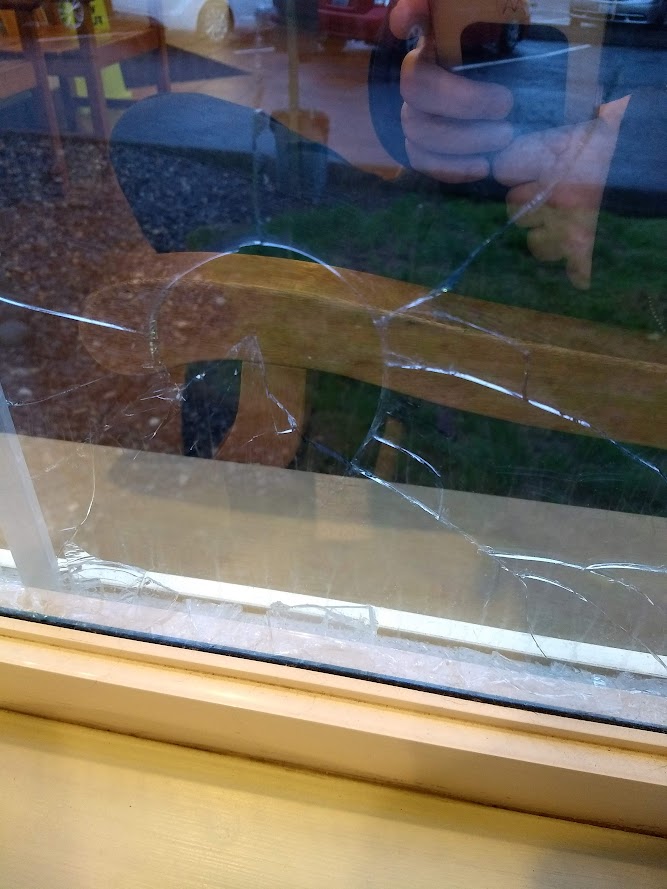
Every fault in the glass
Reveals a tiny portion of the story
Not just the demise
Accidental or
Intentional

But of life before

The path of cracks
Not just determined by type of impact
But weaknesses of circumstances
The powerful stare of our broiling nearest star
The minute detritus of living nature
Weaponized by the force of the wind
Every impact
Not just the ones we notice
Not just the ones that crack

Even the transparent
Cannot evade the erosion of enduring this life.
Though the evidence may not appear
Until we break.

Varnish

How many filters do you have to apply
before you accept belonging?

What happens if they slide?
Do you become unworthy then?

The soft squishy amorphous you
unfiltered and not acceptable for public consumption,
when the truth is revealed and the uncanny leads to confirmation
of the dread always felt.

Docking left incomplete
Connection lost
Territory lines defined
Access denied

The ritual proceeds undaunted,
feeling flare
isolation
mournful observation from a distance
jealousy
sifting the ash
recalibrating the compasses
Set off again.

Another lacquered layer of
what not to do next time,
Heavier each application
Until the weight of fixing for others
creates a momentum insurmountable
and it all stops.

Level

Water
Movement, swish swash
Gentle force, flow
Colorless contemplation of matter,
Invisibility
Containment
Surfaces make the stablest
Negotiations with gravity
Enough to level the pyramids
Millennia still standing
In everything and pulled
Pulled toward the moon
Pulled toward the sun
Pulled toward the center of the ever loving Earth.

We gently bob on our surface
Flinking easily on the plane where we belong
Water and gravity
Centering the place we occupy in an ever present,
Larger than thought universe
Almost invisible to us


When we forget who we are
When we don’t know where we belong
Water might show us home.

Steep Entry Fee

Have you ever attended or held vigil?
Were you an observer?
A mourner?
A worshiper?
The grace that veils mourning
can spread across time and crowds alike,
Leaving a strange peace in its wake.
That smooth spot
leaves room for expressions that have no other place.
There is no other time like grief.
The knot that notes the ending of a life,
a relationship, connection,
the flow stops here.
The unanchored end finally finds ground in the now.
Existentially hypothetical before this moment, and now unchangeable.
There is a before and an ever after.
The space between these is a land of its own.
Here is the dominion of big feelings, of emotional outbursts,
of stunned silence, of wailing, of moaning, of stoicism.
Moments of grief break the rules of polite society.
You are allowed to feel now,
Maybe in a way you Never did with the dead when they were alive.
There lies the shame of it all.
Death is the price of this space, this peace.
Grief for us all.

OOps I Wasn’t Supposed to Post That Here

I declined to join your secret club.
I’ve been in those before.
Secrets have killed me more than once,
I’d like something more.
Secret clubs, and secret rooms, and secret codes and then,
secret attacks behind your back and round and round again.


Don’t trust me with your secrets, your rumors and your lies,
I’m often immune to glamour and will see through your disguise.

Trust me with your truths
those things I understand,
Your calibration of discretion,
Is how I’ll play my hand.
I’d rather have connection, than join an exclusive club.
You can keep your secrets, They’re the hindrance of love.

Choosing a New Legacy

I am feral, I am fae
I culturally reject the legacy I was handed
The god
The land
The blood
The violence

I reject the Patriarchy
I reject supremacy of all kinds
I reject my place in the colonial kingdom

I accept
As fully as I can
my racist, misogynist, abelist
history and personal actions
I can believe in my intentions
but they do not matter
the impact of me not rejecting the white god sooner
will always be mine to bear

And I do not deserve the luxury of a
woe is me.
I do not want it anyway,
My place in the world was handed to me
without my consent,
just like everyone else.

If not woe then what?
Who has time for woe
when we all must be confined in this space and time
Why must I choose to swim upstream?
The trip is so hard and everything is against me.

I want to get to the root
my root
find the poison in my well
so I quit
and work to quit
over and over again

Sending it downstream

“That’s alright I’m used to it.”

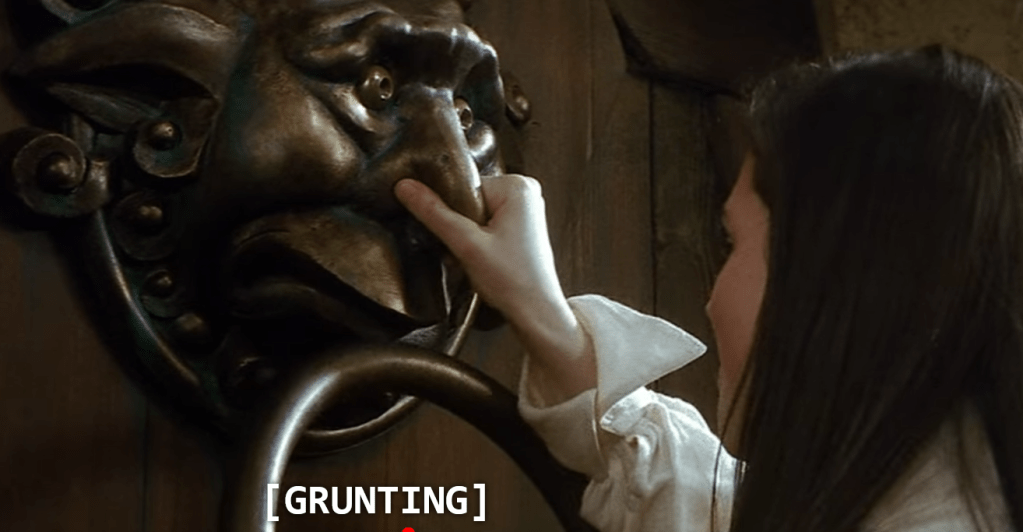
Screen capture from the movie "Labrynth" depicting Sarah holding the nose of a living brass doorknocker, with the sound capture [Grunting} showing.
Just accept the status quo.

This scene. I keep coming back to this scene from 1986 “Labyrinth”.
Sarah is racing against the clock. Time is of the essence. She must find her brother. Things are very urgent to her. She comes to a place where her path is blocked by two doors with living knockers. She has to solve a logic puzzle to choose which door to open. That puzzle doesn’t stick with me. What does is how she proceeds.

The knocker she chooses realizes they like their freedom from having to hold and talk around the knocker ring in their mouth. They resist actively having it put back in. The other knocker even comments that they, “Can’t blame ’em.” But Sarah has her quest and chooses to basically suffocate the chosen knocker by holding their nose and forcing the mouth open so she can reinsert the ring. She doesn’t look comfortable doing it, but knows she’s justified. The knocker’s mouth opens. She reinserts the ring and knocks.

The door opens and Sarah scoots past with a quick, “Sorry.” Which the knocker then replies, “That’s alright I’m used to it. ” Sarah resumes her quest and the movie moves on.

My thoughts stay though. How many, many places in my life do I settle into, “That’s ok, I’m used to it?” Is it ok though? Am I signing up/volunteering/stepping up to/fixing things, just because I always have? Or because I should somehow? Do I really have to settle this way? Do I want to?

Now often when I feel myself sigh with frustration at being stuck in a task I do not enjoy, thinking the whole time, I’m the one who does this. The line from the movie floats through my head, “That’s alright I’m used to it.” and I realize it’s not. It wasn’t right for the knocker and it’s not right for me.

So I start digging, asking myself questions, as I do. What isn’t working? Why do I do this at all? Do I have to be the one to do it? Why? Usually somewhere in this questioning I find that I just fell into a routine and did it unthinkingly and that became a standard, both for me and others around me.

I am thinking of this in terms of household and work tasks. They tend to fall on certain people. Asking for a change is brave. It is not easy to do, because it’s never just about the task. It’s about the relationship. Will this change how I’m seen in ways I can’t control. Right now I’m seen as the person who happily (or begrudgingly) does this particular thing. What will fill this void? How will this change affect my reputation as a worker or partner. I think this is really where the fear lies, not in the delegation of the tasks, but the possible damage to the relationship.

If I try to change this will I be seen as disagreeable? lazy? selfish? Sometimes. But this is probably a red flag in that relationship. Even if that is the case I know it’s better to work on changing things because it is no longer working out for me. I am the only one who can assess my needs and feelings, I have to advocate for myself.

When I do advocate for myself I get three typical responses, immediate acceptance and action, disinterest/brush off, or immediate rejection. Sometimes these are knee-jerk reactions, but even those fall pretty much in these categories. All of these options are better than saying or risking nothing. Why? Because I no longer accept suffering in silence. If they accept the change, yay! If they do nothing, or reject, they cannot do either of those things without knowledge it was brought to their attention. Self advocation brings awareness of your situation into the shared reality. Even if nothing else changes, that did. Now if the status quo does not change and still causes me suffering, I am not suffering because I didn’t say anything, I am suffering because something else needs to change.

With this knowledge I make much better informed choices. I can choose to settle back into what I’m used to, even though it’s not working for me. I can try again for change within the relationship, or I can leave the relationship. Each of these options has innumerable variants. I can start working on easing my suffering one way or another. Advocacy is empowerment. Once I state my grievance or concern and I get the reaction I get, these things are no longer guesswork. I don’t have to guess how the reaction to the proposal will be, I know. I can look for patterns and choose what I want for me.

Unfortunately most of the times I have had to do this, I also had to end the relationship. The status quo was valued more than I was. The thing is, that was true before I tested it. That’s why I was afraid in the first place. Testing it did not create that dynamic, it proved it. Once I prove something like that to myself I can’t go back to being so unvalued, while consciously aware that I’m unvalued. I might be used to it, but that doesn’t make it alright.

Shared Reality

If you read my writing or talk to me in person, eventually I will use the words shared reality. I don’t know when I adopted the concept into my understanding of the world but I did. Recently I had someone ask me to clarify what I mean when I say that.

I want to start by talking about individual reality. Because each of us has a unique path through life, we go through secret and mundane unmentionables all the time. Having experiences we don’t share with others gives us an individual perspective on the world. In America, where I live, we are taught as a society that you as an individual matter a whole lot, and while this is true it is just the surface layer of how people navigate the world together. There is also an underlying cultural thread that we are all equal. Together these, and I’m sure many more factors, focus our individual reality with a subtext that our reality is THE Reality.

Once I realized I was doing this, I started thinking of the Shared Reality. First as the places where my experiences overlay other’s experiences. They still aren’t going to match though. As I explored this concept I realized I projected my reality onto other people a lot.

I expanded my thinking and also thought of Shared Reality as the reality that exists outside of individuals. You can talk about this as what could be witnessed by an outsider. The things that exist outside of myself are in the Shared Reality also. If I were wiped from existence, everything that would still be here exists outside myself and is therefore part of another reality that I was sharing. When I disappeared it was still there. This is true for ideas and thoughts not just physical objects or happenings. If an idea or thought is true or represents a truth it will exist whether or not the thinker does, too. (it will also exist if the thinker disagrees.)

I contracted my thinking again, to try to think of practical applications of this concept. First I started observing more. I gave myself space to just let situations and relationships unfold with the life they have on their own. I realized I was limiting the world and my place in it by thinking my reality was the only one. This led to so many possibilities that I never would have thought about on my own. I started being less afraid, I was able to really start adjusting to the idea that Shared Reality might be much better than my individual reality is.

I also started shifting the things I felt responsible for from “everything I could observe or think of” to the things I had personally committed to, or am assigned by a role in life that I have. This one might need an example. If I would witness a stranger approaching a puddle. I would feel obligated to warn them about the puddle, no matter what I was doing, no matter what they were doing. (Imagine someone shouting out their car window at you, etc. “lookout puddle”) I would feel responsible to keep this stranger safe from stepping a little water. Like if I COULD prevent a moment of discomfort for anyone, it was the moral thing to do. Now I try to imagine the shared reality. One where I don’t exist at all. Most of the time in these imaginings, the other person is a capable human and avoids the water on their own. When they don’t, the worst that happens is they get their feet wet. Neither are any of my business.

Don’t get me wrong if I think someone will be hurt, I will say something if I can without making it worse. Meanwhile I have all this extra thought time for myself, living my individual reality, navigating the shared reality with all of you. 🙂

Friction

Today I want to talk about how I reframe interpersonal conflict. At some point I realized that for the most part, people are just people doing their own thing and occasionally that process gets in the way of other people just trying to do their own thing. The places where their paths get in the way of each other I started to call friction.

So now when I find my self upset or emotional at all about someone else’s behavior I look for the friction points. What are they doing exactly? How does that affect what I’m doing or trying to do? How do I feel about that? What do I want now that I have this information? How do I communicate that?

It ends up a tall order BUT it centers my needs for me, before it even considers what the other person is trying to do for themselves. Why would I want that? Well this does a few things:
1. It makes me accountable for discovering my own wants and needs
2. It puts the burden of communicating them on me (diffuses the need for the other person to mind read)
3. It prevents me from projecting the motivations of another person, before I communicate with them.
4. It gives me a chance to both find my needs and support myself.
5. It let’s me find concrete things to ask for or discuss about impact without getting stuck on emotions.
6. It prevents me from accepting the other persons needs as more important than mine as a default.

And these are just the reasons I can think of in this moment.

Now all this is the ideal, not the reality. It’s what I’m trying to do not necessarily what I am able in the moment to do. I am human and I’ve been through a lot. I know my emotions are trying to tell me something, that’s why I’m upset. With my recent growth though, I am understanding that my emotional world is my own. No one else is going to be affected by the world or another person’s actions the same way I will. I have my own unique body, history and experiences. So does everyone else. Our personal experiences are just that PERSONAL. Meaning my emotions, the signals my body gives me to help me understand my experiences, are also personal. They do not translate from one person to another directly. To communicate my needs and wants and have them really be understood, I must do the translation myself.

When I first started this process I found it really unfair. It’s not fair that I have to do all this work when I’m already feeling so hurt, angry or betrayed. Since I have started trying to see conflict as friction, and centering my feelings for myself, it has gotten easier. So much easier. I don’t need others to validate my feelings anymore. (It still feels good when they do, but I accept my feelings whether or not anyone else recognizes them as valid.) I remind myself that if I have my feelings, if I can perceive them, they exist. That is valid.

Ok, so I accepted that my feelings are valid, now what? I have to treat them like they are a top priority. Now it is important to acknowledge here that valid does not mean valid or important to anyone else, these are my feelings and they are important to me. Everyone else has feelings that are as valid and important to them. This shift allows me to care for my feelings and opens up space for the other person to care about theirs.

This internal work lets both people focus on the actual points of friction, without judging each other’s paths, without invalidating each other’s feelings, gives space for both to express their individual needs, because the focus is now on defining and resolving the friction, not on who’s feelings are more important.