
Today I want to talk about how I reframe interpersonal conflict. At some point I realized that for the most part, people are just people doing their own thing and occasionally that process gets in the way of other people just trying to do their own thing. The places where their paths get in the way of each other I started to call friction.
So now when I find my self upset or emotional at all about someone else’s behavior I look for the friction points. What are they doing exactly? How does that affect what I’m doing or trying to do? How do I feel about that? What do I want now that I have this information? How do I communicate that?
It ends up a tall order BUT it centers my needs for me, before it even considers what the other person is trying to do for themselves. Why would I want that? Well this does a few things:
1. It makes me accountable for discovering my own wants and needs
2. It puts the burden of communicating them on me (diffuses the need for the other person to mind read)
3. It prevents me from projecting the motivations of another person, before I communicate with them.
4. It gives me a chance to both find my needs and support myself.
5. It let’s me find concrete things to ask for or discuss about impact without getting stuck on emotions.
6. It prevents me from accepting the other persons needs as more important than mine as a default.
And these are just the reasons I can think of in this moment.
Now all this is the ideal, not the reality. It’s what I’m trying to do not necessarily what I am able in the moment to do. I am human and I’ve been through a lot. I know my emotions are trying to tell me something, that’s why I’m upset. With my recent growth though, I am understanding that my emotional world is my own. No one else is going to be affected by the world or another person’s actions the same way I will. I have my own unique body, history and experiences. So does everyone else. Our personal experiences are just that PERSONAL. Meaning my emotions, the signals my body gives me to help me understand my experiences, are also personal. They do not translate from one person to another directly. To communicate my needs and wants and have them really be understood, I must do the translation myself.
When I first started this process I found it really unfair. It’s not fair that I have to do all this work when I’m already feeling so hurt, angry or betrayed. Since I have started trying to see conflict as friction, and centering my feelings for myself, it has gotten easier. So much easier. I don’t need others to validate my feelings anymore. (It still feels good when they do, but I accept my feelings whether or not anyone else recognizes them as valid.) I remind myself that if I have my feelings, if I can perceive them, they exist. That is valid.
Ok, so I accepted that my feelings are valid, now what? I have to treat them like they are a top priority. Now it is important to acknowledge here that valid does not mean valid or important to anyone else, these are my feelings and they are important to me. Everyone else has feelings that are as valid and important to them. This shift allows me to care for my feelings and opens up space for the other person to care about theirs.
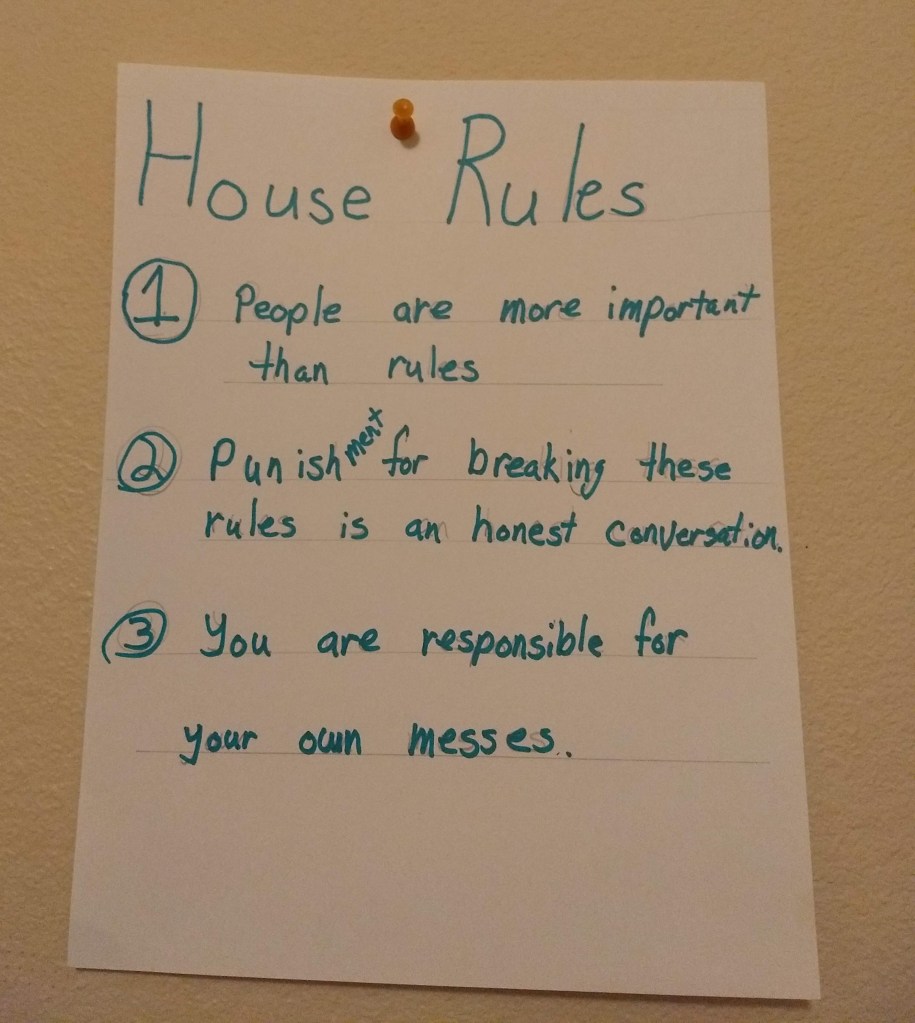
This internal work lets both people focus on the actual points of friction, without judging each other’s paths, without invalidating each other’s feelings, gives space for both to express their individual needs, because the focus is now on defining and resolving the friction, not on who’s feelings are more important.
 Big Thoughts in Our Little World